
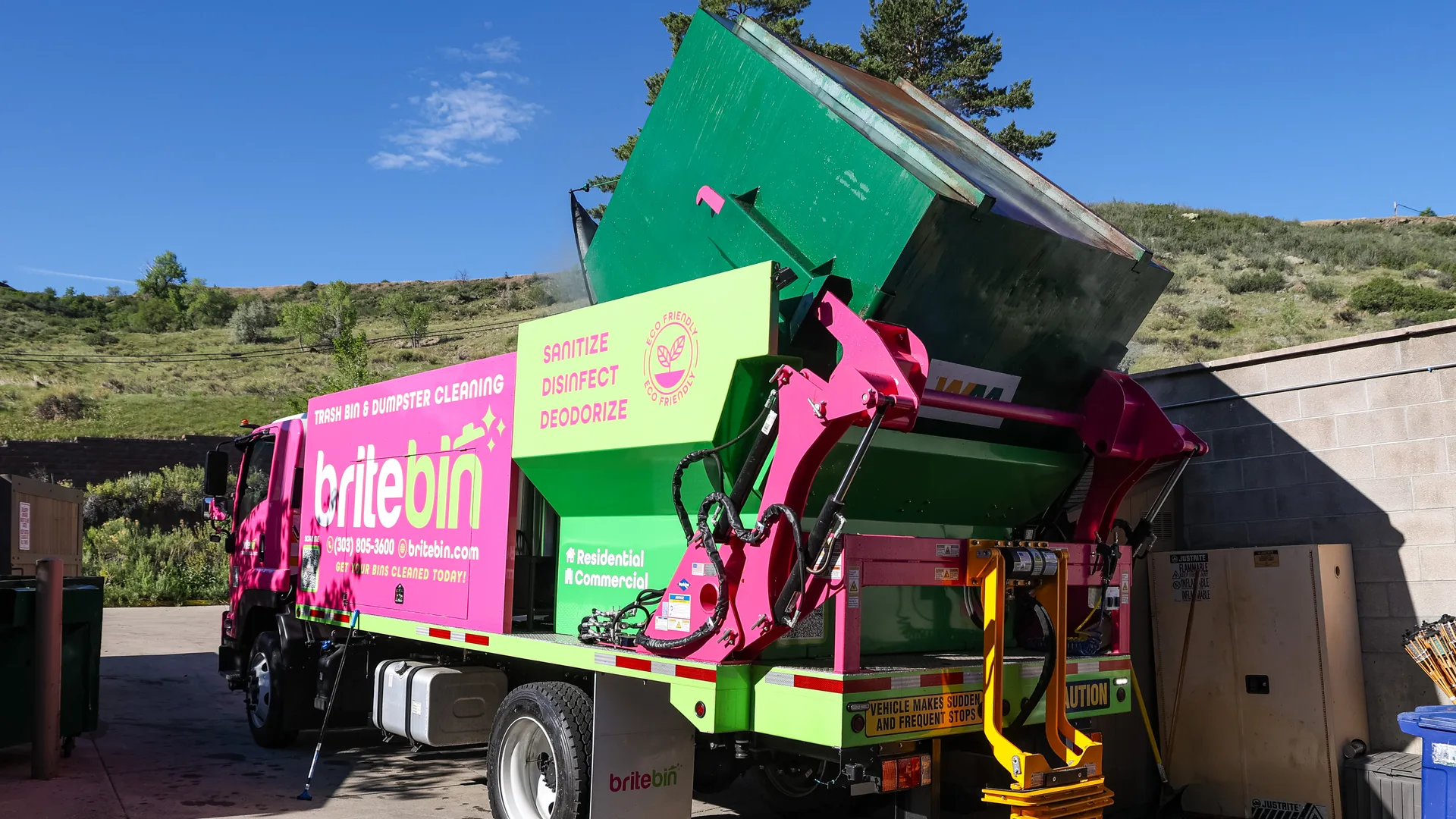
A dumpster can look clean while the concrete pad still holds grease, grit, and odor that tenants notice on the first warm afternoon. Commercial waste areas need a plan that covers the container and the space around it — not a single generic wash. Britebin provides dumpster cleaning and pad pressure washing across Greater Denver from Golden.
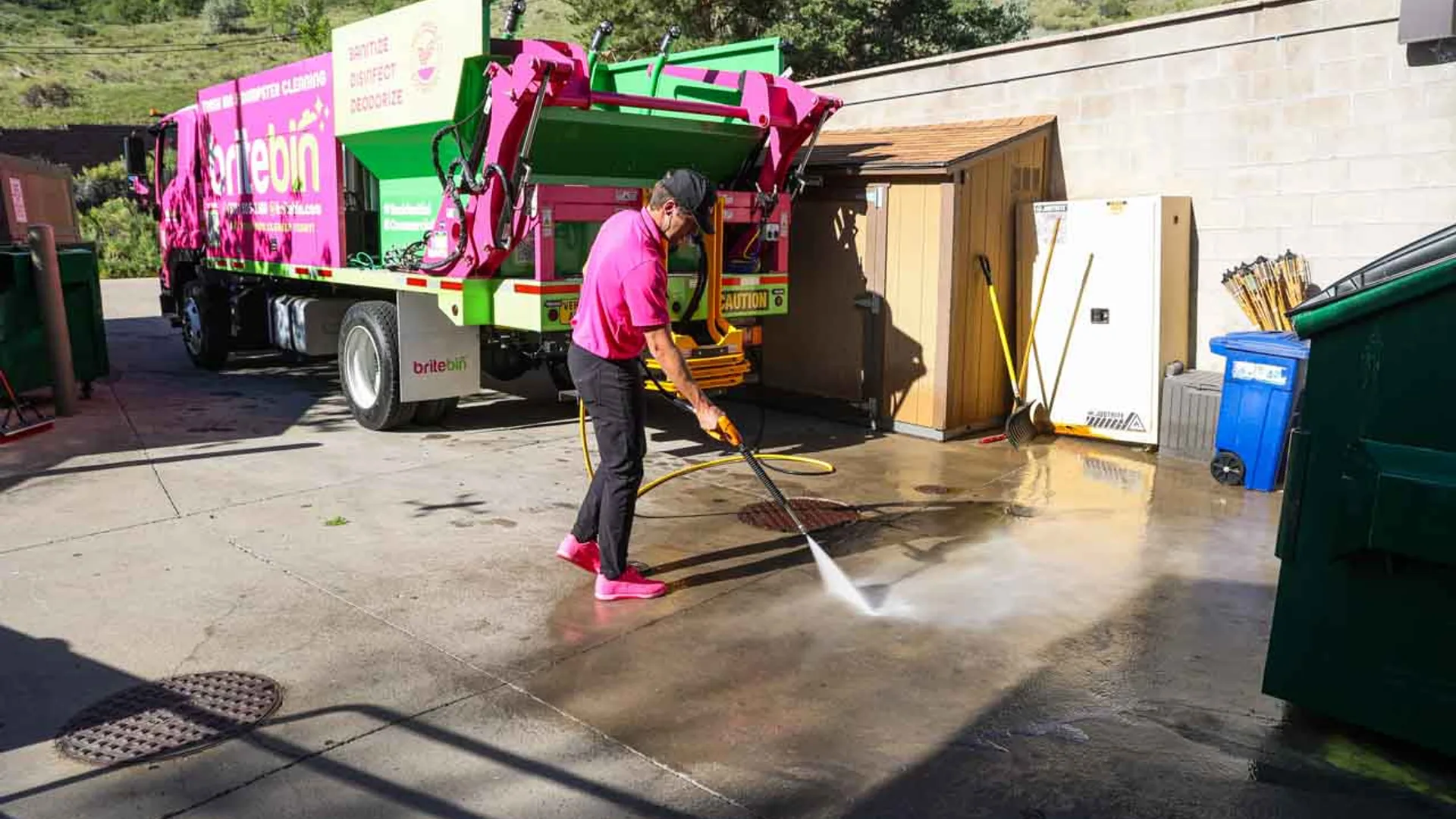
Container vs. pad scope. Dumpster cleaning targets interior walls, lids, and exterior grime on the box. Pressure washing addresses the pad, enclosure walls, and apron where spills accumulate. They are related but different services — see dumpster cleaning vs. pad pressure washing for when you need one or both.
Walk the site after pickup on a hot day. Note lid fit, grease streaks on enclosure doors, standing water on the pad, and whether grime tracks toward walkways. Food-service sites accumulate grease patterns fast; office pads pick up cardboard dust and broken glass grit. Photos with a date stamp help us quote without a site visit.
Drainage and stormwater. If water pools toward a door or storm drain every rain, document it. Pad cleaning may still be needed, but fixing slope may be a separate facilities project. We capture wash water on site rather than pushing fats and detergents toward drains — the same standard described in professional wastewater handling.
Coordinate with hauler timing. Service works best when dumpsters are empty and the enclosure is accessible during the agreed window. Read coordinate cleaning with hauler pickup before booking against a full box. Gate codes, dock hours, and fire-lane rules belong in the first request.
Match cadence to volume and visibility. Restaurant pads often need weekly or bi-weekly service in summer; moderate retail may stay monthly. Presentation near tenant entrances matters even when volume is moderate — see commercial dumpster curb appeal. Compare commercial tiers on pricing.
What to send for a quote. Container count, enclosure dimensions, gate access, photos of pad and doors, typical hauler day, and whether food service or office waste dominates the stream. Properties in Denver, Lakewood, and Wheat Ridge fold into recurring loops more easily when access notes are complete upfront.
Call 303-805-3600 or use contact with photos and access notes. We confirm scope — container, pad, or both — before the first visit.