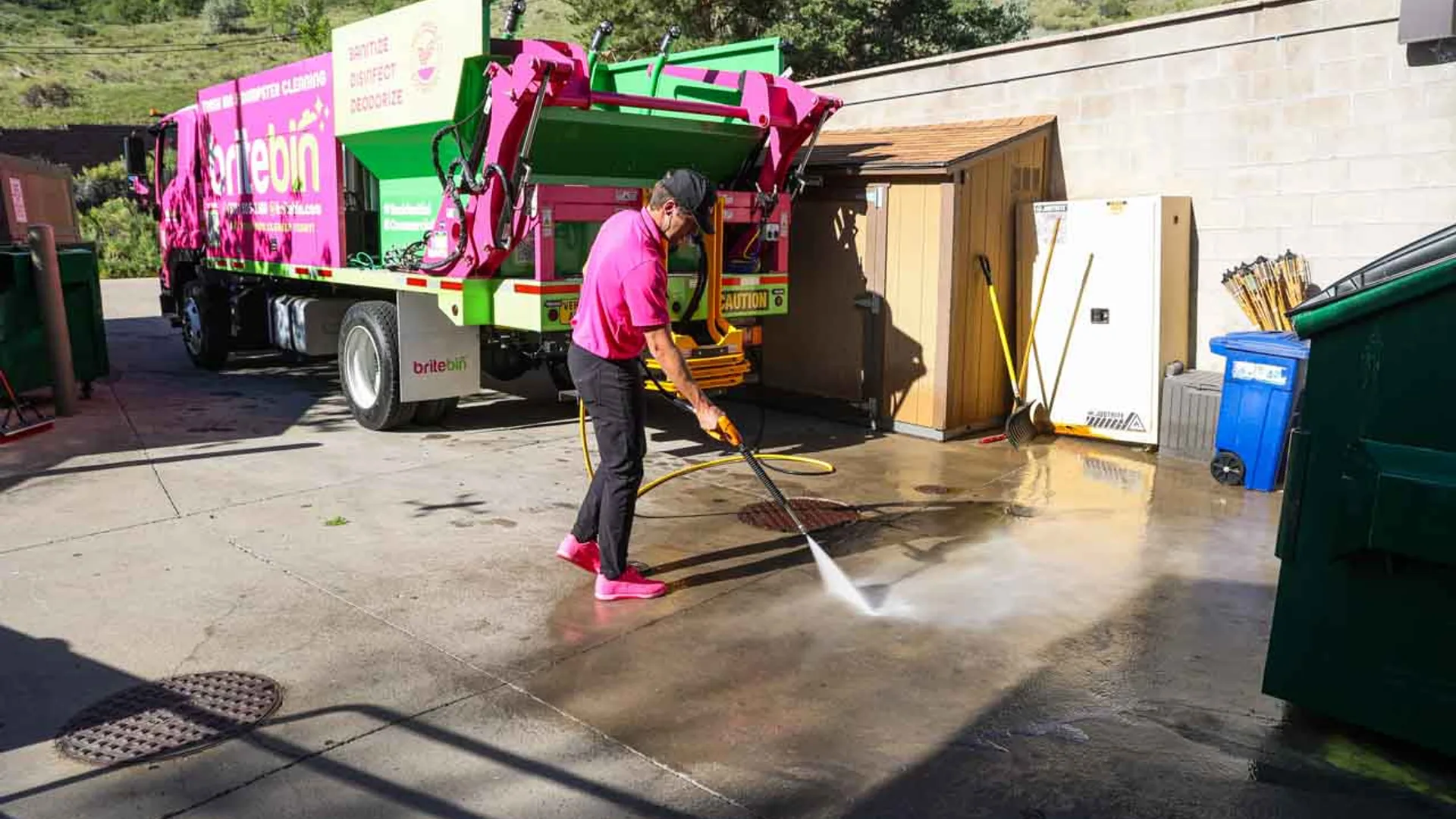
Professional pressure washing and wastewater handling near a Denver-area service surface

The Dirty Water From Cleaning a Trash Bin Should Not Become a Driveway Problem

Professional bin cleaning includes managing the rinse water and residue, not simply pressure-washing a container and sending the mess across the driveway.

303-805-3600

Britebin is locally owned and operated in Colorado, providing professional bin cleaning with eco-friendly practices and responsible water handling. Join the clean revolution today.

A trash bin can be cleaned with a garden hose. The inside may look better afterward. The driveway may not.

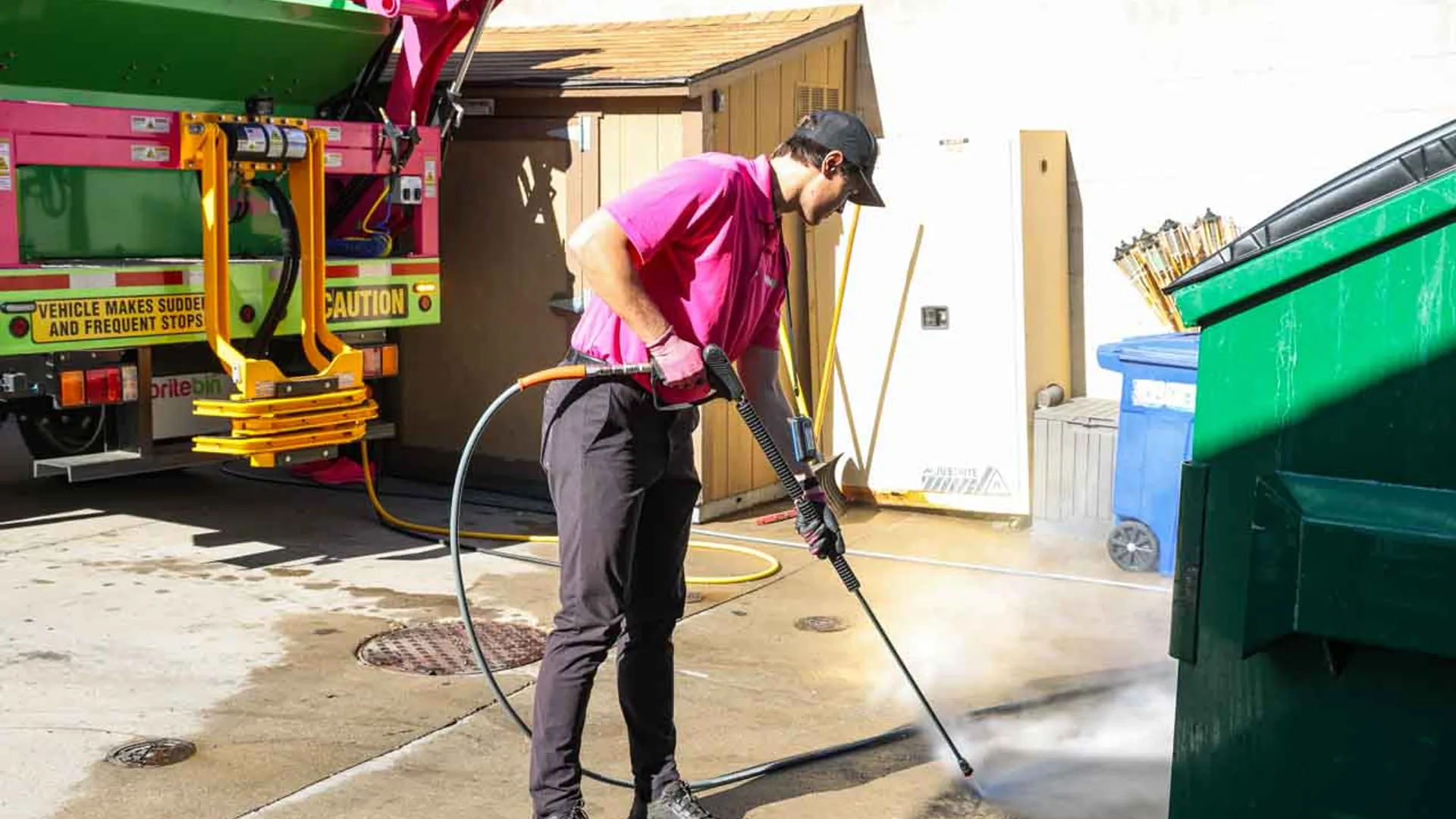
Britebin technician cleaning a container while managing residue around the work area

Food residue, liquid from torn bags, grime, cleaning products, and dirty rinse water have to go somewhere. When a homeowner washes the container beside the garage, that material can spread across concrete, collect near the curb, or move toward a storm drain.

We include professional wastewater handling and environmental protection as part of our residential service. We also describe one benefit of route-based cleaning as avoiding hoses, chemicals, and runoff in your own yard. The difference between professional cleaning and casual rinsing is partly what happens to the mess after it leaves the bin.

<strong>The bin is only half of the cleaning area.</strong> A homeowner may focus on the walls and bottom of the container. The surrounding surface matters too. A poorly managed cleaning can leave greasy residue on concrete, food particles near the garage, odor beside the curb, dirty water in the alley, cleaning product on nearby landscaping, material moving toward drainage, or a slippery area around the bin. That can turn a cleaner container into another cleanup job. Professional service should account for both the container and the work area.

<strong>More pressure does not solve the water question.</strong> A pressure washer can remove material quickly. It can also move that material quickly. Using stronger equipment without a plan for residue may spread the mess farther across the driveway or alley. The basic service questions should include how the bin is positioned, what material is inside it, where rinse water will travel, how residue will be managed, whether the surrounding surface is protected, and whether the service avoids directing contaminated water toward storm drains.

We do not publish every equipment detail of our process, and homeowners should not assume a specific recovery method that we have not documented. We do state that wastewater handling and environmental protection are part of the service. Compare residential options on pricing and browse coverage in Denver and Golden.

Residential and commercial sites create different challenges. A residential bin usually sits at a curb, driveway, or alley collection point. A commercial dumpster may sit on a concrete pad, inside an enclosure, beside a loading dock, or near a restaurant service area. We offer separate commercial dumpster cleaning and commercial pressure washing because the larger site can involve more surfaces, access issues, grease, traffic, and residue. Our commercial pressure-washing page specifically discusses planning for surface type and responsible wastewater handling.

That distinction matters. Cleaning the dumpster interior does not automatically clean the enclosure, surrounding pad, alley, or storefront surface. Our earlier articles already separated those services. The new question is how the service area will be managed while either job is performed. Read dumpster cleaning versus pad pressure washing when the concrete around the container is the louder problem.

<strong>Storm drains are not ordinary disposal points.</strong> A storm drain is designed to move rainwater away from streets and properties. It should not be treated as the automatic destination for dirty wash water, chemicals, food residue, or commercial grime. A responsible cleaning plan should avoid simply pushing material toward the nearest drain.

Property owners can help by telling us about storm drains near the service area, sloped pavement, cracks or low points, interior garage drains, landscaping beside the bins, shared alleys, restaurant grease or food residue, restrictions imposed by the property or HOA, and areas that cannot be blocked during service. Those details allow us to understand the site before work begins.

<strong>Cleaning products should not be chosen only by smell.</strong> A product that makes the bin smell strongly perfumed may create the impression of cleanliness. The more important questions involve what the product is intended to do, how it is used, and how the rinse is handled. Homeowners should not mix household chemicals inside a trash bin before professional service. Combining cleaners can create unnecessary exposure and may complicate the technician's work.

Before the visit, empty the bin, do not pour bleach or other chemicals inside, tell us about any unusual spill, mention paint, oil, chemicals, or hazardous material, keep children and pets away from the work area, and follow any preparation instructions we provide. A standard household-waste bin is different from a container exposed to automotive fluids, construction chemicals, or another unusual substance.

<strong>Recycling bins deserve the same process.</strong> A recycling container can accumulate residue from beverage cans, food containers, broken bags, and loose material. Cleaner recycling bins give recyclable material a better chance of staying clean rather than sitting in old residue. Homeowners can reduce buildup between visits by emptying liquids from containers, rinsing food residue when local recycling instructions allow, keeping loose food out of the recycling bin, closing the lid, avoiding bagged household trash in the recycling container, and cleaning up spills promptly. The bin-cleaning service provides a reset. The household routine affects how quickly the residue returns.

Ask about the whole work area. When scheduling professional bin or dumpster cleaning, describe more than the number of containers. Useful information includes surface type, street, driveway, or alley access, nearby drains, slope, enclosure size, container count, normal collection day, heavy food or grease residue, customer or tenant traffic, time restrictions, and whether pressure washing is also being considered. Learn more about Britebin and how we approach route-based cleaning.

We provide residential bin cleaning, commercial dumpster cleaning, and commercial pressure washing throughout Greater Denver. Call 303-805-3600 or use contact to schedule service. Related reading stays on the blog.

Book Britebin for your address

If this article got you thinking about cleaner carts or dumpsters, sign up or call—we will confirm your route.

Request more information

Share your details for residential service—we will follow up shortly.

Book residential curbside service online, or switch to Commercial to request a quote from our team.

Residential details

Or call 303-805-3600. We will confirm your address on the phone.

Thank you!

We received your message and will follow up soon. For urgent help, call 303-805-3600.