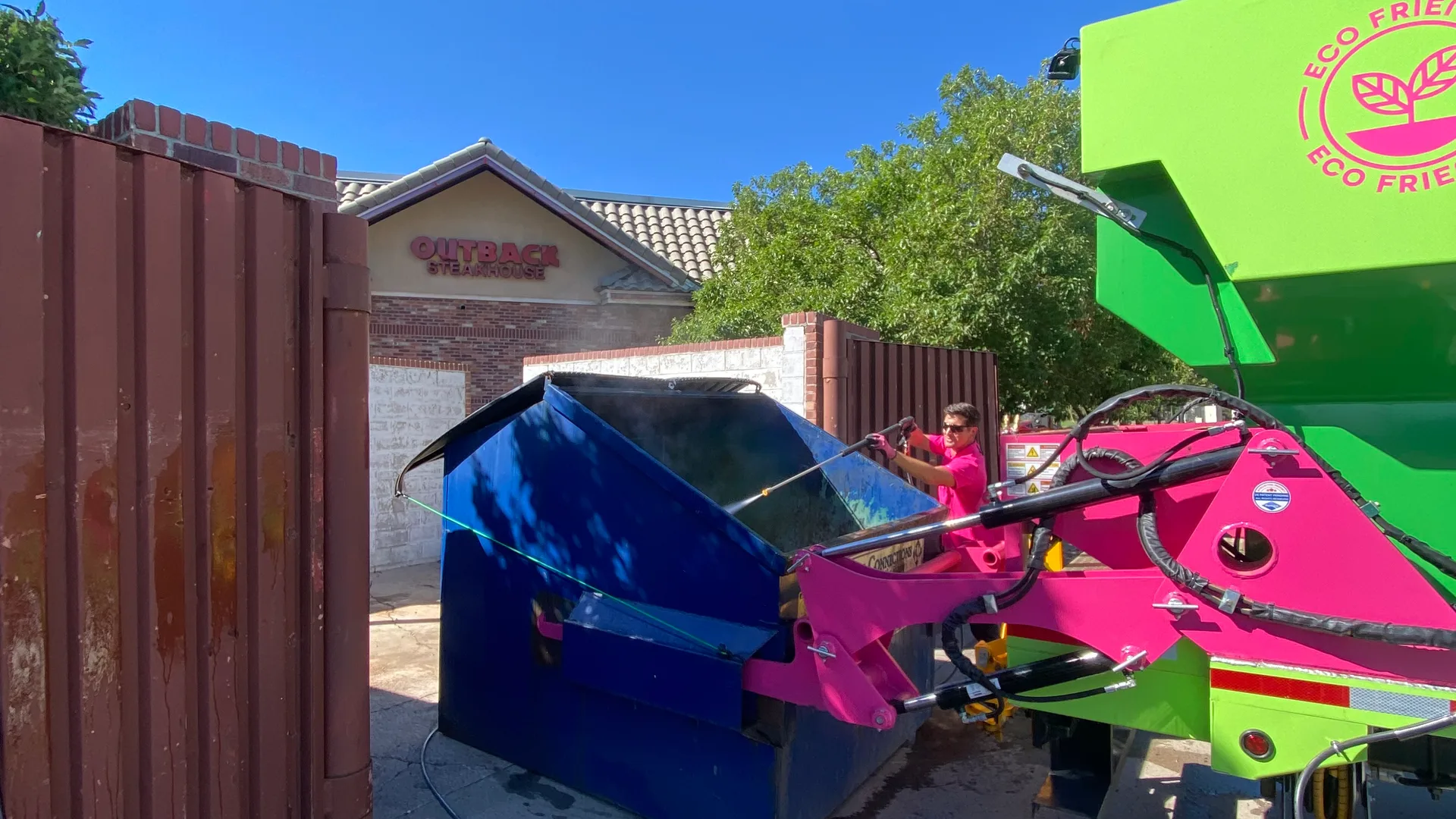
A commercial dumpster can look noticeably better after it has been cleaned while the enclosure around it still looks exactly the same. That is because the container and the surface below it are collecting different things.
The dumpster holds the waste. Its interior walls, bottom, lids, and exterior collect residue as bags are added and removed. The concrete pad catches what escapes: small spills, leaking bags, grime from wheels and carts, and whatever reaches the ground during everyday use.
We treat those as two separate services. Our commercial dumpster cleaning focuses on the containers, while our commercial pressure washing covers dumpster pads, enclosures, loading docks, alleys, storefronts, and other hard surfaces. A property can need one without needing the other, or it can make sense to schedule both.
<strong>Look at the waste area after the dumpster is moved.</strong> One of the easiest times to understand the difference is during pickup or service when the container has shifted from its usual spot. The concrete underneath may show a dark outline or areas where residue has built up. An enclosure wall may have stains several feet away from the dumpster itself. The route employees use to bring trash out may look dirtier than either one.
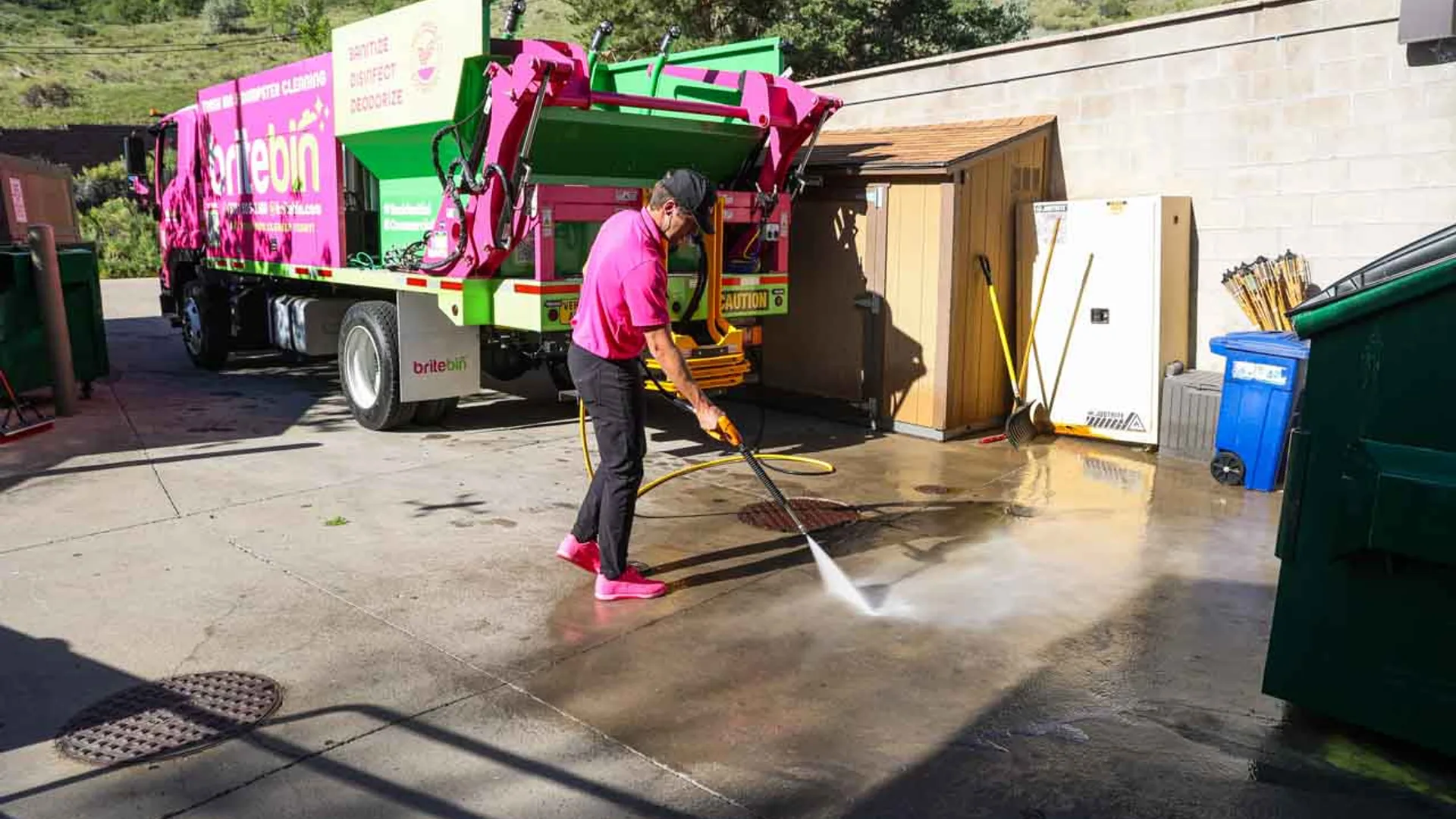
Cleaning the dumpster will not remove that material from the concrete. Our pressure-washing service specifically includes dumpster pads and enclosures and is intended for buildup on the surrounding surface. This is especially relevant for restaurants and other commercial properties where liquids and food residue can reach the pad. The dumpster may need frequent container cleaning, while the concrete may need a separate washing schedule based on how quickly it changes. Those two schedules do not have to match.
<strong>The waste area may be only one part of the pressure-washing job.</strong> Our commercial pressure-washing service is broader than the dumpster pad. We also list loading docks, alleys, storefronts, sidewalks, patios, and walkways among the surfaces we can clean. That matters because a property manager may begin by noticing a dirty enclosure and then realize the same service area continues through an alley or loading dock.
Delivery trucks, carts, employee traffic, and waste movement can leave grime well beyond the place where the dumpster sits. Cleaning only the container may make one piece look better while the rest of the service area still needs attention. The same goes for customer-facing areas. A storefront sidewalk has nothing to do with the inside of the dumpster, but it may still be part of the property's pressure-washing plan. The best quote therefore starts with the areas that actually need cleaning rather than asking for "dumpster service" and assuming that phrase includes every surrounding surface.
<strong>Surface type and water movement matter before the washing begins.</strong> Pressure washing creates dirty water. Where that water goes is part of the job. We plan commercial washing around the surface type, access, water recovery, and operating hours. We also state that residue from dumpster pads should not simply be pushed toward a storm drain.
For the property manager, this means wide photos are useful when requesting a quote. Show the pad, nearby drains, the enclosure, adjoining alley or loading area, and any gate or curb that affects access. A close-up of one stain does not show how water moves across the site. We can then scope the cleaning method around the actual surface and layout. Scheduling matters too. A restaurant receiving deliveries in the service lane may have a different work window from an office property with a quiet rear enclosure. We plan commercial work around operating hours and access rather than assuming the crew can arrive at any time.
<strong>Pair the services when the whole waste area needs a reset.</strong> There are situations where the answer is simple: both the container and the surrounding pad are dirty. We allow pressure washing to be paired with recurring dumpster cleaning or scheduled as a one-time service. That can make sense for a property trying to reset a waste area before moving onto a normal maintenance schedule. It can also make sense after a spill or on a property that inherited a dirty enclosure from a previous tenant or management company.
The important distinction is knowing what each service is doing. Container cleaning handles the dumpster itself. Pressure washing addresses the hard surfaces around the site. Once those jobs are separated, it becomes much easier to build the right cleaning schedule. Compare commercial options on pricing, browse about Britebin, and review coverage in Denver, Golden, and Lakewood.
We are headquartered in Golden and provide commercial container cleaning and pressure washing throughout the Greater Denver area. Property managers can call 303-805-3600 or send photos of the site through our commercial quote process on the contact page. Related reading is on the blog, including how often commercial dumpsters should be cleaned.