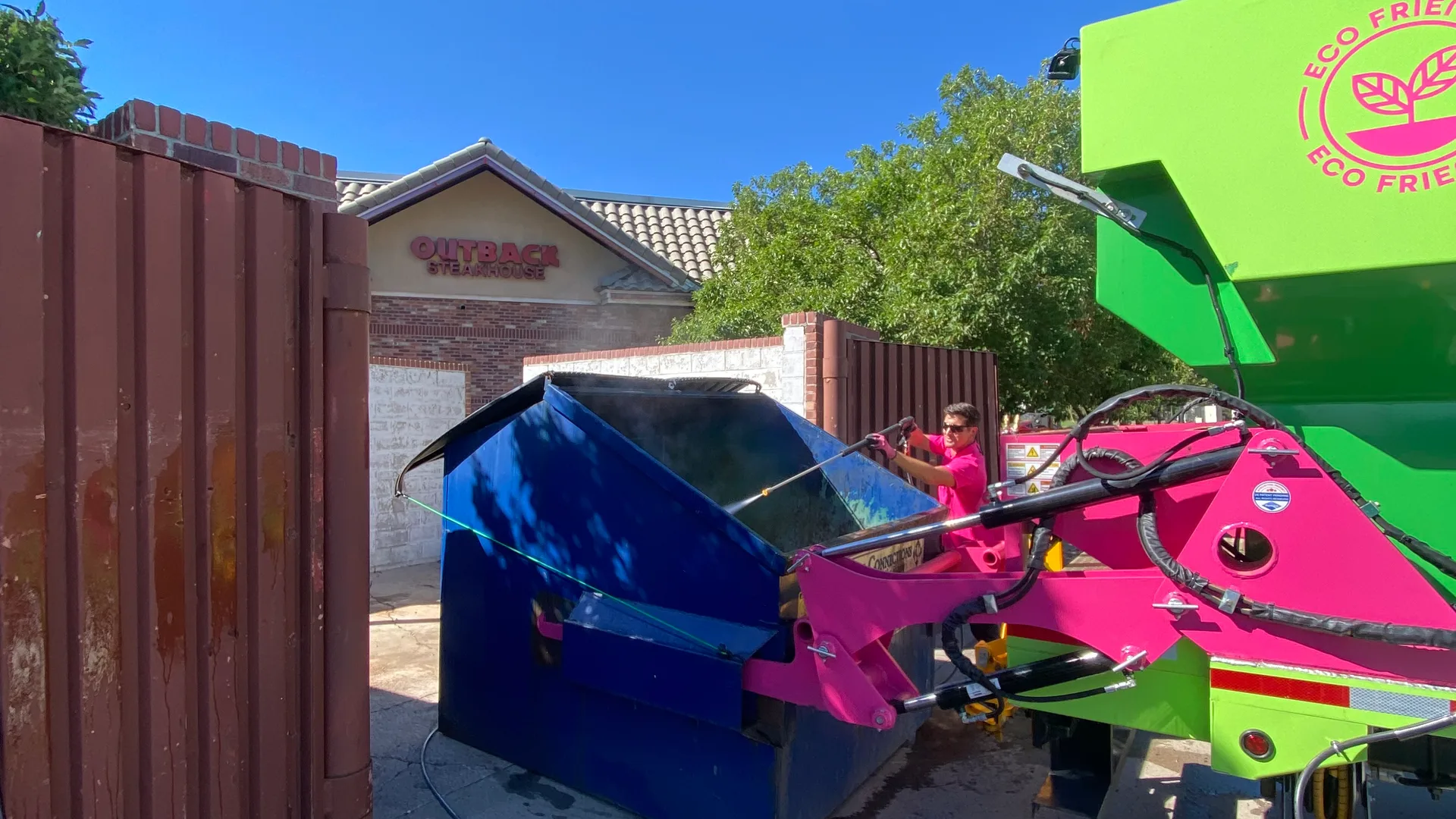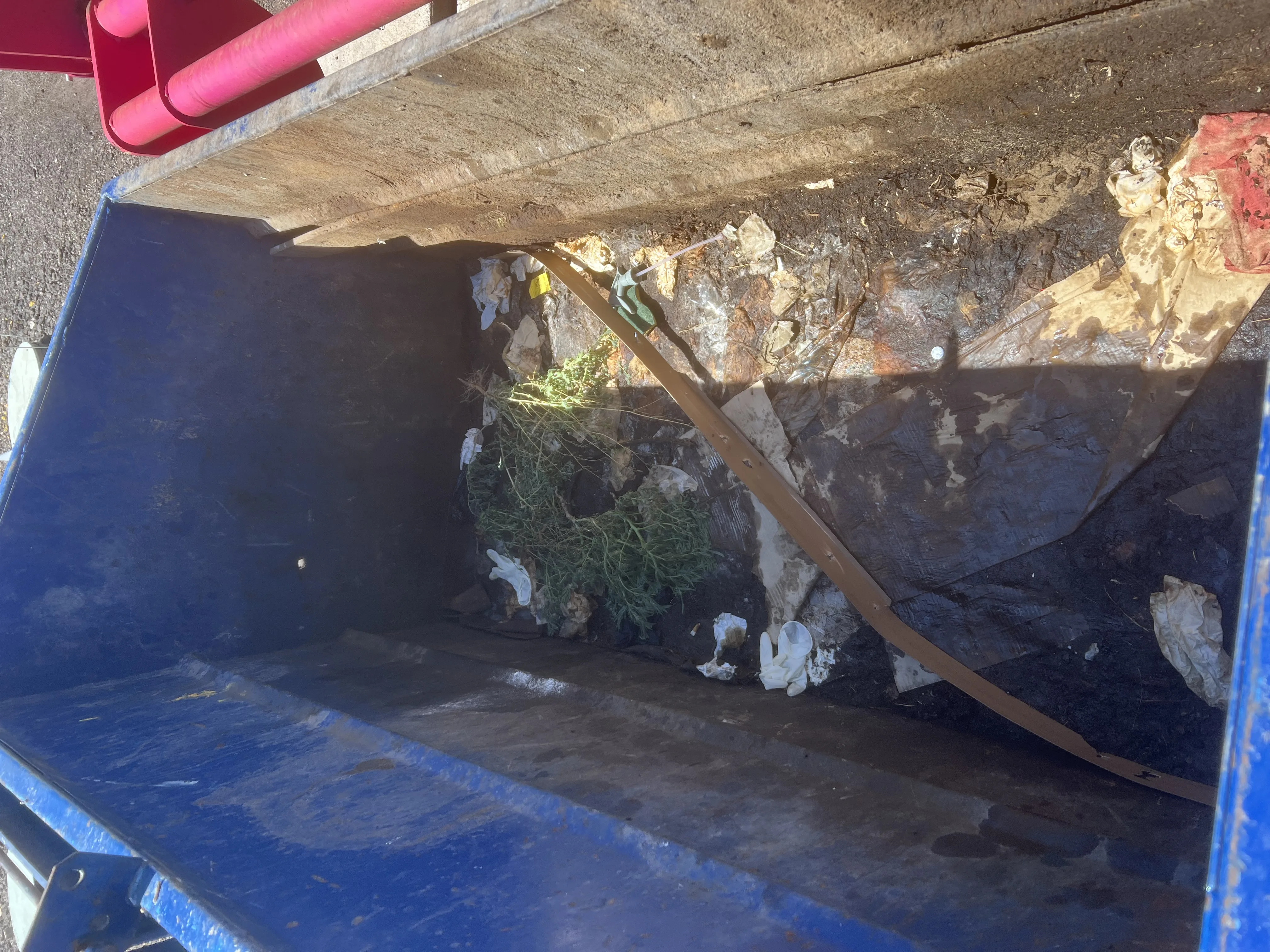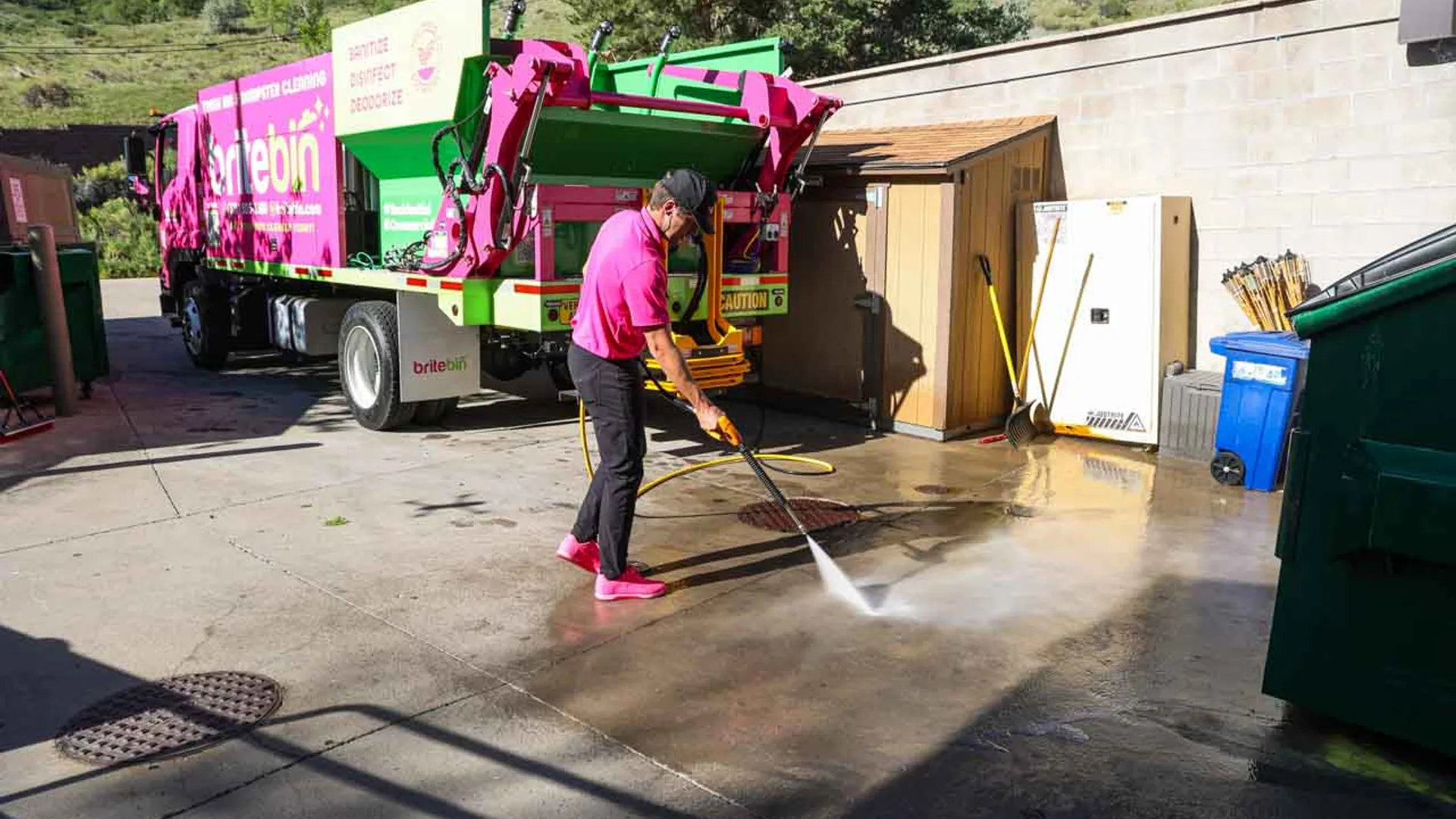

Dumpster pad before and after video
Dumpster before and after video
Wastewater capture on site
Starting condition
A Golden restaurant dumpster pad and enclosure showed grime stains, food residue, trash, odor, and grease buildup. This type of pad is common behind restaurants and in alleyways where cooking oil and food waste repeat every week.
How the pad was cleaned
We set up a full capture and recovery system. Sandbags went in front of potential water runoff paths, and our vacuum unit sat near the sandbags to capture water and debris before it could reach a storm drain.
We dampened the pad with the pressure washer, applied degreaser, and used a scrub brush to agitate the product in the worst areas. After about fifteen minutes of dwell time, we surface cleaned the pad, then used a hand wand on stubborn stains and grease lines.
Equipment and conditions
This job called for about two hundred fifty gallons of water, three thousand pounds per square inch of pressure, water heated to about two hundred degrees Fahrenheit, and industry standard degreasers. That combination is beyond what most restaurant owners can replicate with a garden hose and consumer tools.
Heavy buildup was the main challenge. When pads are cleaned on a weekly commercial schedule, grease often stays softer and easier to remove than on pads that go long stretches without service.
Results
After service, the concrete was clean with no debris or trash left on the pad. The surface was left in a glossy, maintained condition suitable for regular restaurant operations.
This work shows the range of Britebin services: residential bins, commercial dumpsters, and complex dumpster pads that need specialized pressure washing and wastewater recovery.