

By mid-July the fly cycle at an alley cart runs in days, not weeks. What you see on the lid tells you how established the film underneath already is. Reading that difference on blocks in Denver, Wheat Ridge, and foothill-adjacent streets near Golden helps you time a clean that resets the cart instead of knocking flies off for an afternoon.
Adults circling the lid line. A handful of flies means odor from residue on lids, hinges, and top sidewall — but no colony yet. This is the cheapest moment to act. Cooler morning walks give a truer count than hot afternoons when flies scatter as you lift the lid.
Pale egg clusters in seams. Clusters tucked under the rim can hatch within a hot day or two on the Front Range. Wiping the outside does little because eggs sit in folds a garden hose sprays past. One professional clean after pickup usually resets the cart if you catch this stage early.
Maggots at the lid or bottom. Visible maggots mean biofilm is established. They feed on residue municipal pickup leaves behind — emptying the cart on trash day does not remove what they live on. This is a clear signal for residential service, not another DIY rinse. See why smell returns fast for the same film mechanics.
Heat compresses every stage. Alley pavement radiates into black plastic through the afternoon. Compost and trash streams usually show flies first; blue carts draw them when soda and beer residue goes in unrinsed. Stream-specific notes live in compost cart film and recycle stream film articles.
Timing beats effort volume. Walk carts after city collection when interiors are empty. Look at lid seams and hinge lines, not just the bin floor. Book service when equipment can reach those surfaces — the same post-pickup window in scheduling after city trash day.
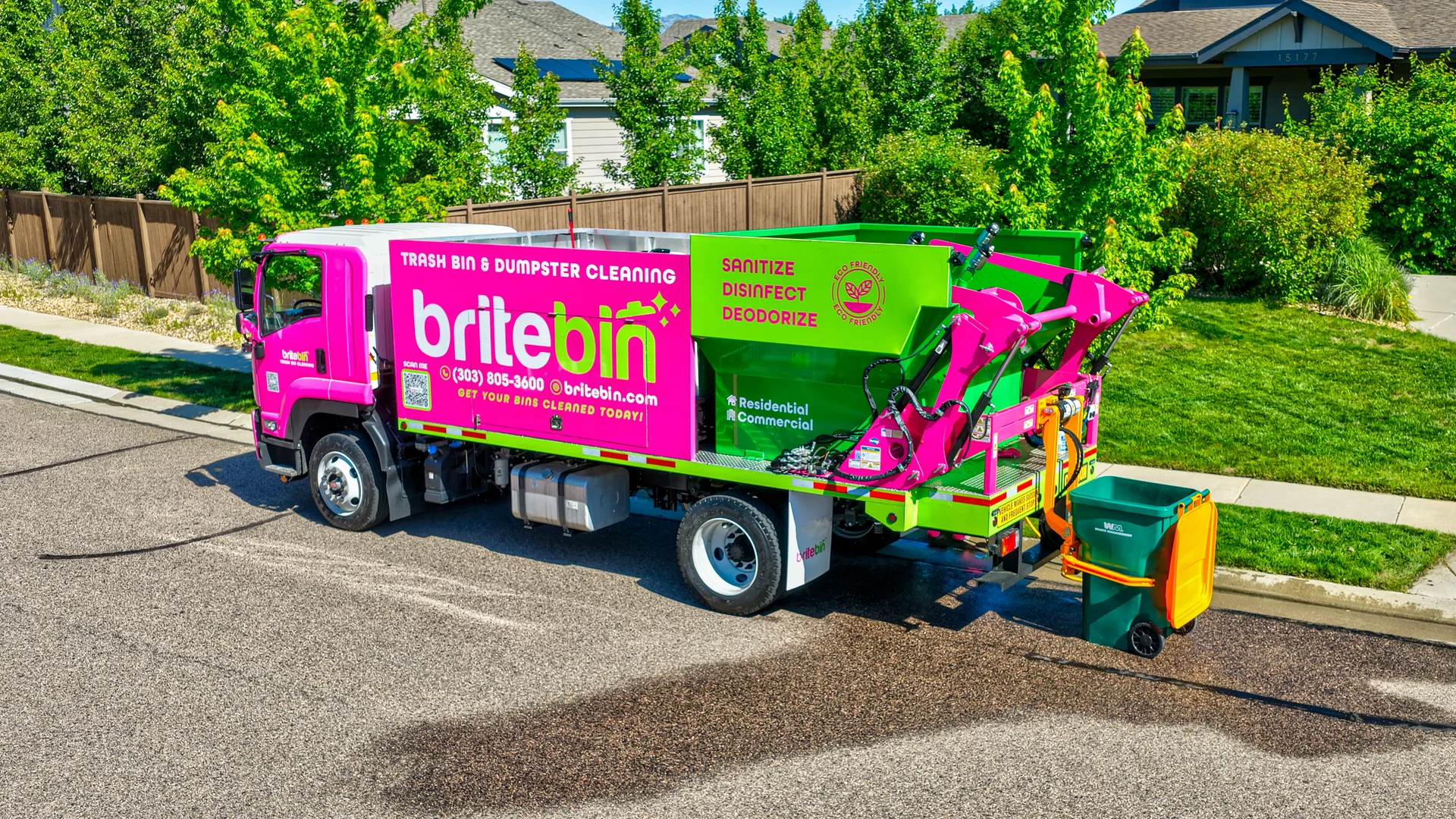
Why a hose is not enough. A garden hose knocks adults off and rinses loose debris but leaves egg clusters and biofilm on textured plastic. Professional cleaning uses pressure and temperature that lift film, with wash water captured on site instead of pushed toward shared alley drains.
Commercial pads show the same cycle faster. Stacked summer pickups leave residue on concrete and container skirts. Property managers who see flies at the enclosure before tenant complaints can read stages the same way homeowners do. See commercial pad film when routes stack and commercial scopes for enclosures.
Match frequency to reappearance speed. Sunny alley carts in Lakewood and Arvada often need monthly or bi-monthly service through summer. Compare tiers on pricing and enroll streams separately so the bin that draws flies first sets the plan.
Call 303-805-3600 or use contact with photos of lid seams, trash day, and bin count. We confirm the next open window on your loop and schedule while the interior is empty.