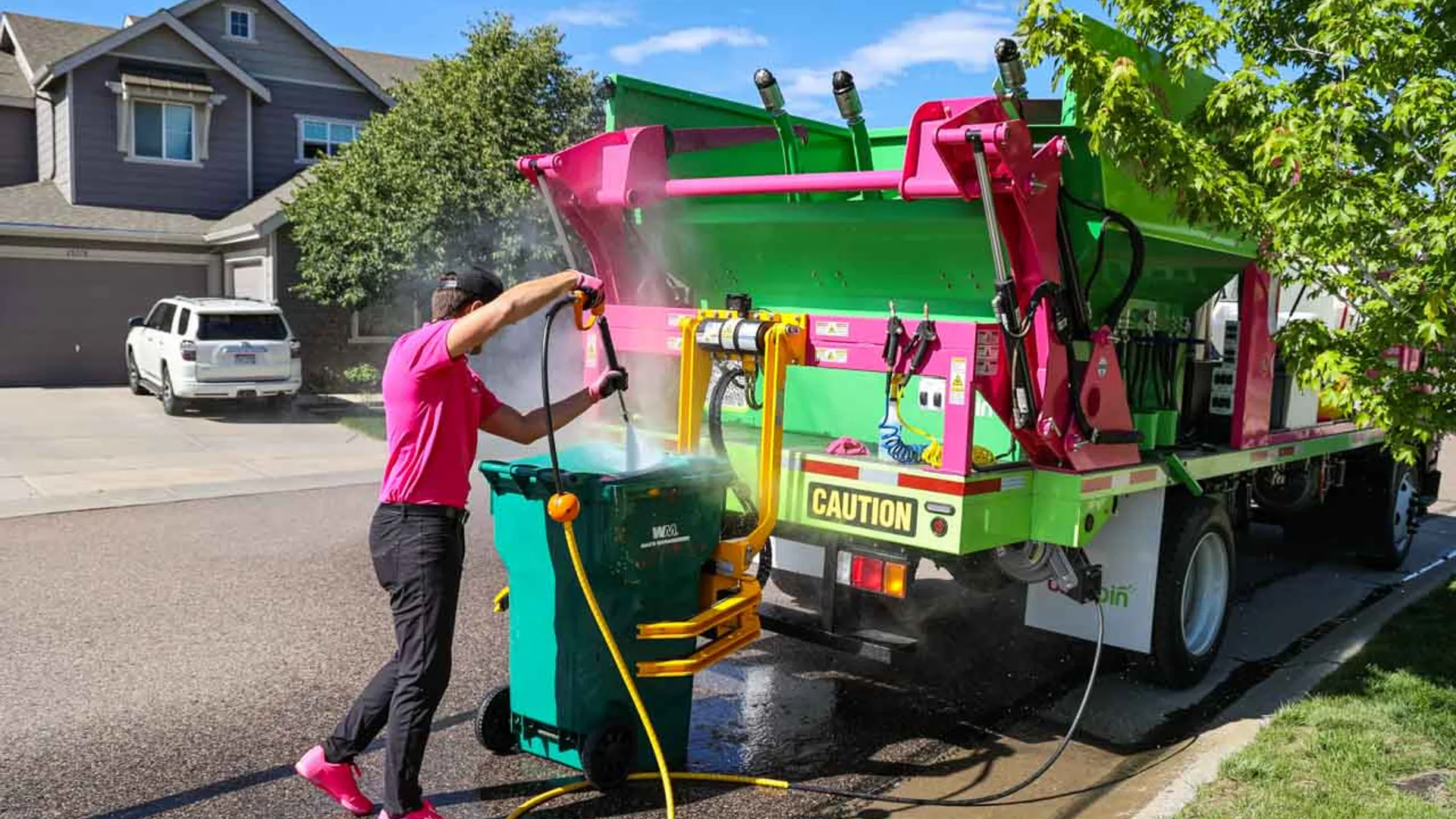


Compost carts work harder than trash or recycle bins once sustained heat settles across the west metro. Green lids collect organics, coffee grounds, yard trimmings, and food scraps that break down on plastic sidewalls even when the cart looks empty from the street. Municipal pickup removes bagged contents, yet hinge lines and lid undersides keep a film that holds odor compounds through warm nights. Britebin stages from Golden and builds loops west of Denver on purpose, which is why compost cadence should be judged stream by stream instead of assuming one calendar fits trash, recycle, and organics equally.
Sustained heat is different from a single hot afternoon. It is a string of days when alley pavement and driveway concrete radiate into cart plastic, when lid condensation adds moisture, and when bacteria never really pause between city visits. Trash carts with mostly bagged waste may stay tolerable for weeks; compost carts with exposed organics film can feel sour within days if frequency lags. Our residential overview explains per bin enrollment so you can bump compost to monthly while recycle stays on every two months. Published pricing shows how per visit math scales when only one stream needs more attention.
West metro geography changes sun exposure block by block. A compost cart on a south facing Lakewood driveway heats differently than a shaded alley placement in Wheat Ridge or a sloped lot in Arvada. Film builds where heat and moisture overlap, not where the cart looks fullest. Customers who wait until lid odor is obvious often discover the interior already carries a stable biofilm layer. Professional equipment targets that layer, as described in why bin smell comes back in summer, without pretending one deep rinse at home solves a hot season.
Empty compost carts still need rhythm. Scheduling after municipal pickup keeps interiors accessible, the same guidance we give across the metro in scheduling after city trash day. Mention whether your compost cart shares a tight townhome row or sits alone at the curb so crews stage hoses realistically. Photos in a contact request after pickup show lid fit, hinge grime, and whether condensation pools under the rim. Those details matter more than container age when heat is sustained rather than occasional.
Compost film is not only a smell issue. Handles and wheels track organics into garages and mudrooms when household traffic rises. Along routes toward Littleton and Denver pockets we serve, wildlife interest also climbs when scraps linger on plastic between visits. Cleaner interiors reduce attractants between city pickups without overpromising. Foothill adjacent addresses near Evergreen should note wildlife patterns when choosing frequency, especially if carts sit outside overnight.
Recycle and trash habits affect compost too. Households that rinse jars and stack cardboard cleanly still toss wet organics that accelerate film when lids do not seat fully after hauler pickup. Check hinges during warm weeks; a lid that hangs open one inch lets heat and smell out across shared alley sight lines. Cluster housing boards care about presentation as much as odor, a pattern we cover in HOA and townhome bins. Per bin pricing means neighbors can enroll compost only while others wait.
Commercial adjacent organics deserve clarity as well. Small food prep sites and mixed use corners with shared enclosures should request commercial quotes when containers exceed curbside cart scale. Grease and organics on pads behave differently from residential green lids, yet the same film physics apply when heat sustains. Property managers comparing enclosure presentation can read commercial dumpsters and curb appeal alongside this residential compost focus.
Routing from Golden keeps arrival windows honest. Cross streets help assign crew loops; two homes in the same postal code can sit on opposite sides of a seam. We would rather explain a Tuesday cluster in Wheat Ridge than promise a window density cannot support that week. The same logic appears in Colorado based routing. Golden specific placement habits live in Golden trash and recycle bin cleaning guide when you want local curb and slope notes without repeating compost film physics here.
Environmental handling matters on every compost visit. We capture wastewater on site instead of pushing rinses toward storm drains, which is harder to replicate responsibly with consumer gear in a shared alley. That standard applies whether your cart sits in Wheat Ridge or along a connector corridor toward Denver. Seasonal yard trimmings add volume without always adding smell until heat compacts grass clippings against sidewalls. Adjust frequency when lawn cycles peak even if kitchen scrap volume stays steady.
When film returns within days after a one time clean, volume or frequency is usually the lever, not chemistry alone. Shifting compost from quarterly to monthly for three months beats hoping cooler nights arrive soon enough to ignore sour lids. Customers comparing priorities can use the bin service priority quiz to see whether compost film, alley presentation, or commercial pads should lead their next quote conversation. Nothing here replaces confirming your address against active route density. Send cross streets, compost placement notes, and photos after pickup. We will confirm route fit before locking a cadence that survives sustained west metro heat.
Kitchen habits change compost film speed more than many households expect. Coffee filters, tea bags, and melon rinds leave sugars on plastic that warm afternoons amplify. Bagging wet organics helps municipal trucks, yet bags tear and leave corners of film either way. Pairing professional cleans with lid checks after hauler pickup closes the loop film starts. If your block shares alley access with restaurant prep sites, note that in your first message so crews expect mixed traffic and staging limits behind the building.
School wind down and longer at home snacking also push compost volume without warning. Lunch leftovers and half finished fruit move from backpacks to green lids faster than trash streams change. When household schedules loosen, compost often soils before recycle or trash, which is why stream by stream enrollment matters. Read school wind down and household bin rhythm when schedule shifts overlap with sustained heat on the same cart row.