
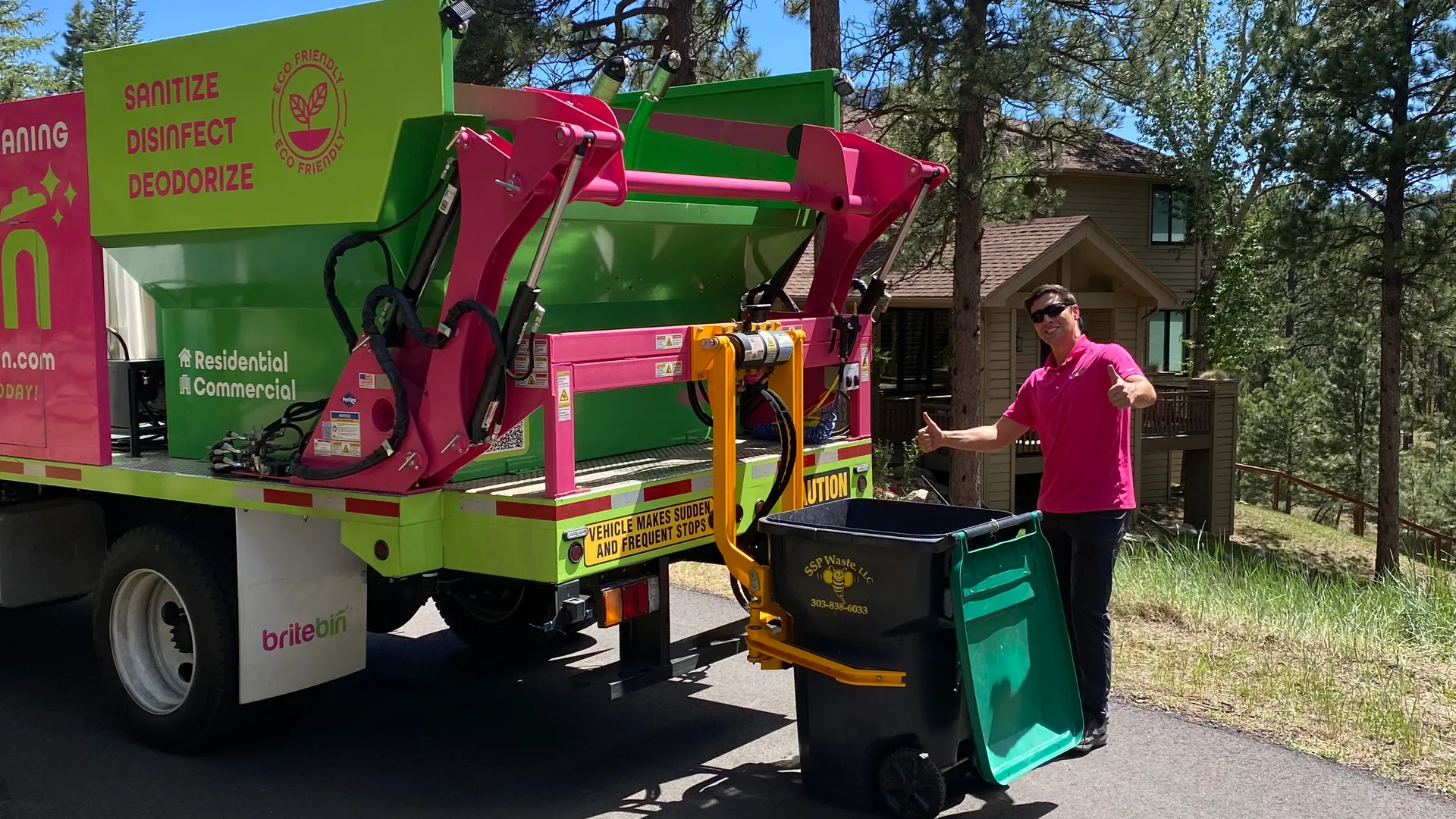

A cart can look empty after trash day and still smell bad by the next afternoon. That is normal on the Front Range in summer: heat speeds bacterial breakdown, and plastic holds a thin layer of organic film that municipal pickup does not remove. This article explains why odor returns, what a hose rinse does and does not fix, and how recurring bin cleaning fits a Colorado schedule.
Why empty bins still smell. Trash bags leave juice, crumbs, and grease on sidewalls, hinge lines, and the underside of the lid. Bacteria feed on that residue and produce odor compounds. Warm air and sun on black carts accelerate the process. Lid condensation adds moisture, so smell can spike even when nothing new went in the bin since pickup.
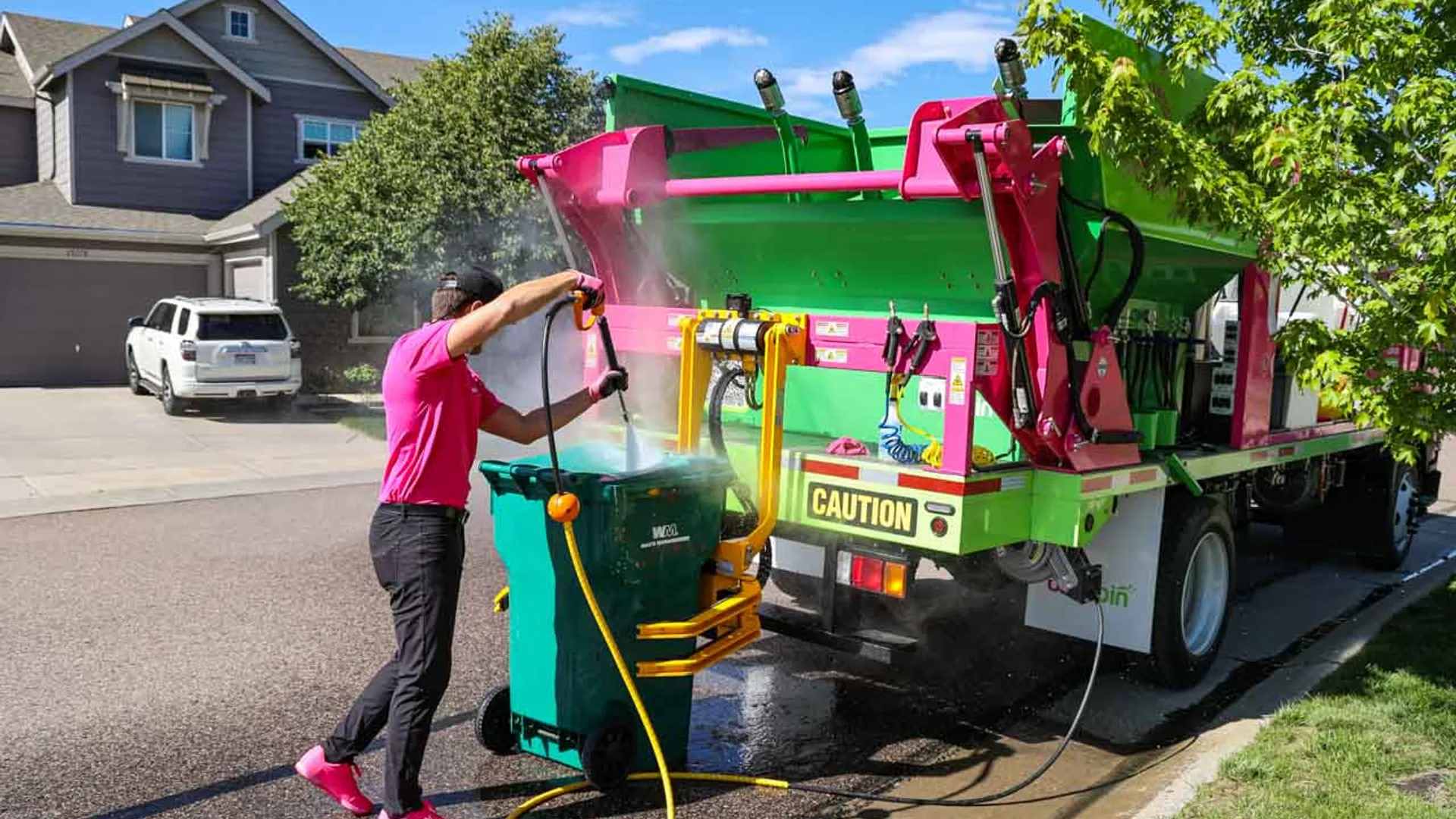
What biofilm is. Biofilm is the sticky bacterial layer that forms on textured plastic over time. A quick rinse knocks off loose debris but often smears the film instead of removing it. That is why many homeowners notice odor back within a day or two after hosing the cart in the driveway. Professional cleaning uses pressure and temperature aimed at those surfaces, with wash water captured on site rather than run toward storm drains.
Colorado summer makes it faster. Along routes in Golden, Lakewood, Arvada, and Denver, we see the sharpest odor jumps when highs sit in the 90s and carts sit in full sun on alley pavement or south-facing driveways. Compost and trash streams usually smell first; blue recycling carts follow when soda, beer, or food containers go in unrinsed. Shaded curb spots often hold longer between cleans, but they are not immune once biofilm is established.
What a garden hose can and cannot do. Rinsing right after municipal pickup helps for a day or two when the interior is empty and upright. It rarely reaches egg clusters in lid folds or established film on sidewalls. In shared alleys, pushing fats and dirty water toward a drain creates a runoff problem a consumer setup is not built to handle. A hose is a stopgap; it is not the same as resetting the cart interior.
How professional cleaning helps. We sanitize, disinfect, and deodorize after collection when routing allows — typically the same afternoon, often between 12 PM and 8 PM on your service day. The goal is to remove residue and biofilm while the bin is empty, not to mask smell with fragrance. One visit can reset a bad cart; recurring service keeps film from becoming the baseline you stop noticing until a guest lifts the lid.
Choosing a frequency. Match the plan to how fast your bins soil, not a generic calendar. Sunny alley carts with heavy compost use often need monthly or bi-monthly service through July and August. Shaded pairs with mostly bagged trash may stay on bi-monthly or quarterly until peak heat. Published tiers on pricing are per bin — enroll trash, recycle, and compost separately if one stream is the problem. You can shift cadence seasonally without changing your whole account.
Habits between visits. Bag food waste securely, rinse recyclables when your program allows, wipe obvious spills before they bake in, and keep lids closed. Schedule cleaning after city trash day when the interior is accessible. If holiday weeks shift your hauler, check our holiday pickup reference before assuming a normal week.
We route from Golden across the west metro and foothills. Call 303-805-3600 or use contact with your address, bin count, trash day, and whether carts are at the curb or in an alley. We will confirm route fit and suggest a realistic frequency before you enroll.