

Colorado's urban-wildlife edge runs through neighborhoods where bears routinely test trash cans, compost carts, and garage storage. Colorado Parks and Wildlife (CPW) advises keeping attractants unavailable — especially garbage, food scraps, and pet food — and using bear-resistant containers where local rules require them. Hardware helps. It does not replace residue and odor control inside the cart.
Bear-resistant vs. bear-proof. Most products marketed to homeowners are bear-resistant: reinforced lids, screw-down latches, or certified cans that slow access. CPW and manufacturers use different testing standards; a latch that stops a curious raccoon may not stop a determined black bear after repeated visits. In foothill communities, the goal is layered defense — storage discipline, certified hardware where required, and interiors that do not keep broadcasting food smell after the hauler empties the bag.
Local rules matter. Golden's municipal code addresses bear activity and attractants in city limits. Jefferson County and unincorporated foothill areas — including much of the Evergreen service band — publish wildlife and trash-storage guidance tied to CPW recommendations. Check your HOA, county, and city pages before buying hardware; some districts specify certified can models or garage-storage windows. Britebin does not sell bear cans — we clean and deodorize the containers you already use.
Storage timing is half the battle. CPW consistently warns against putting carts out the night before pickup in bear country. That advice collides with suburban habit: set the black cart at the curb Tuesday evening for a Wednesday truck. In Golden mesa neighborhoods and Evergreen driveways, the safer pattern is morning set-out on collection day, or secured garage storage until the truck passes. Pair that with a post-pickup bin cleaning window so residue left after collection does not sit another week.
Food residue and odors outlast the bag. Bears follow smell. Juice from broken bags, compost film, and pet-waste residue cling to plastic walls and hinge lines. A bear-resistant lid does not scrub the interior. Read why bin smell returns fast for the biofilm mechanics — the short version is that empty does not mean clean, and clean interiors are less interesting on the next pass through your alley.
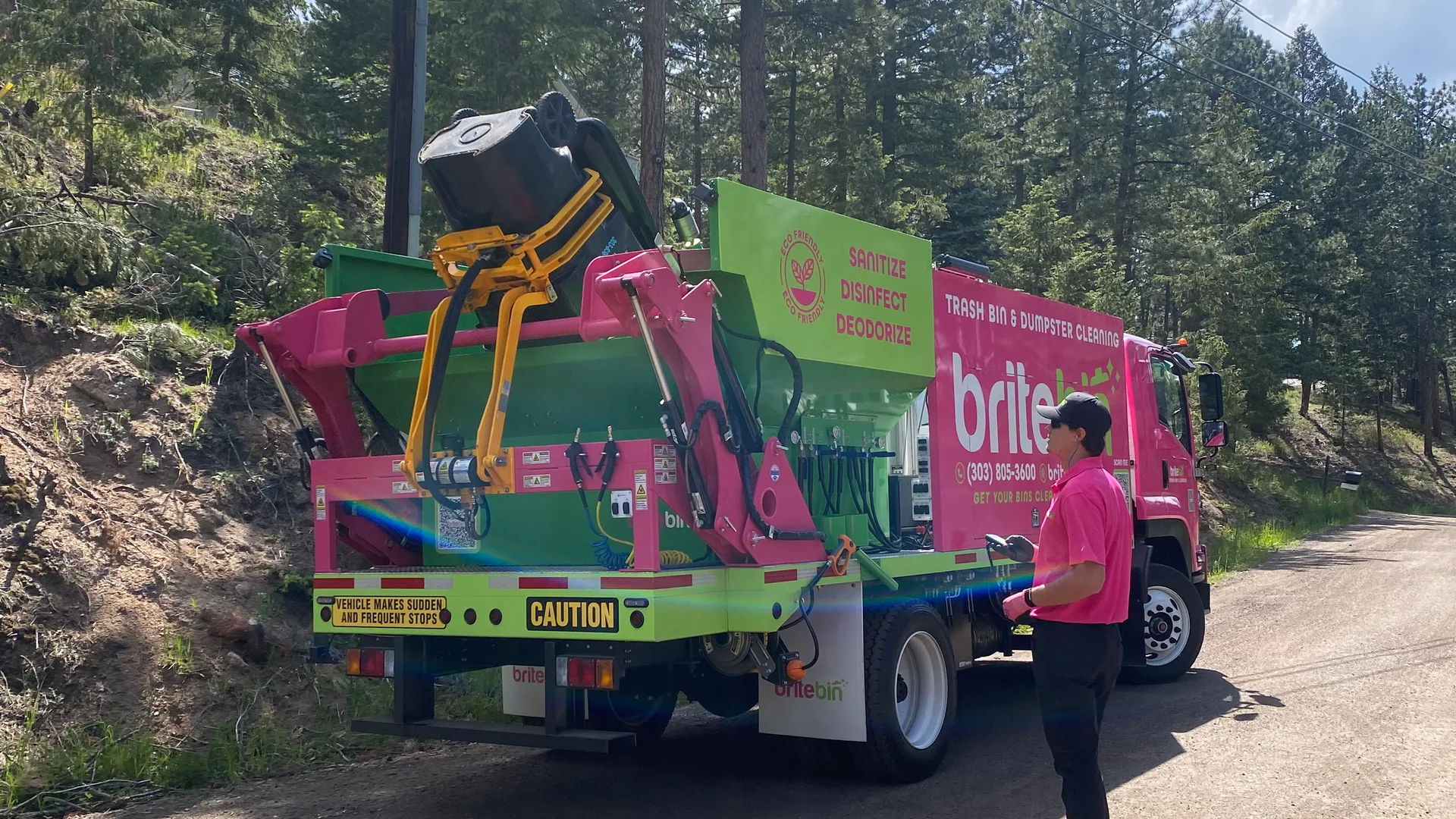
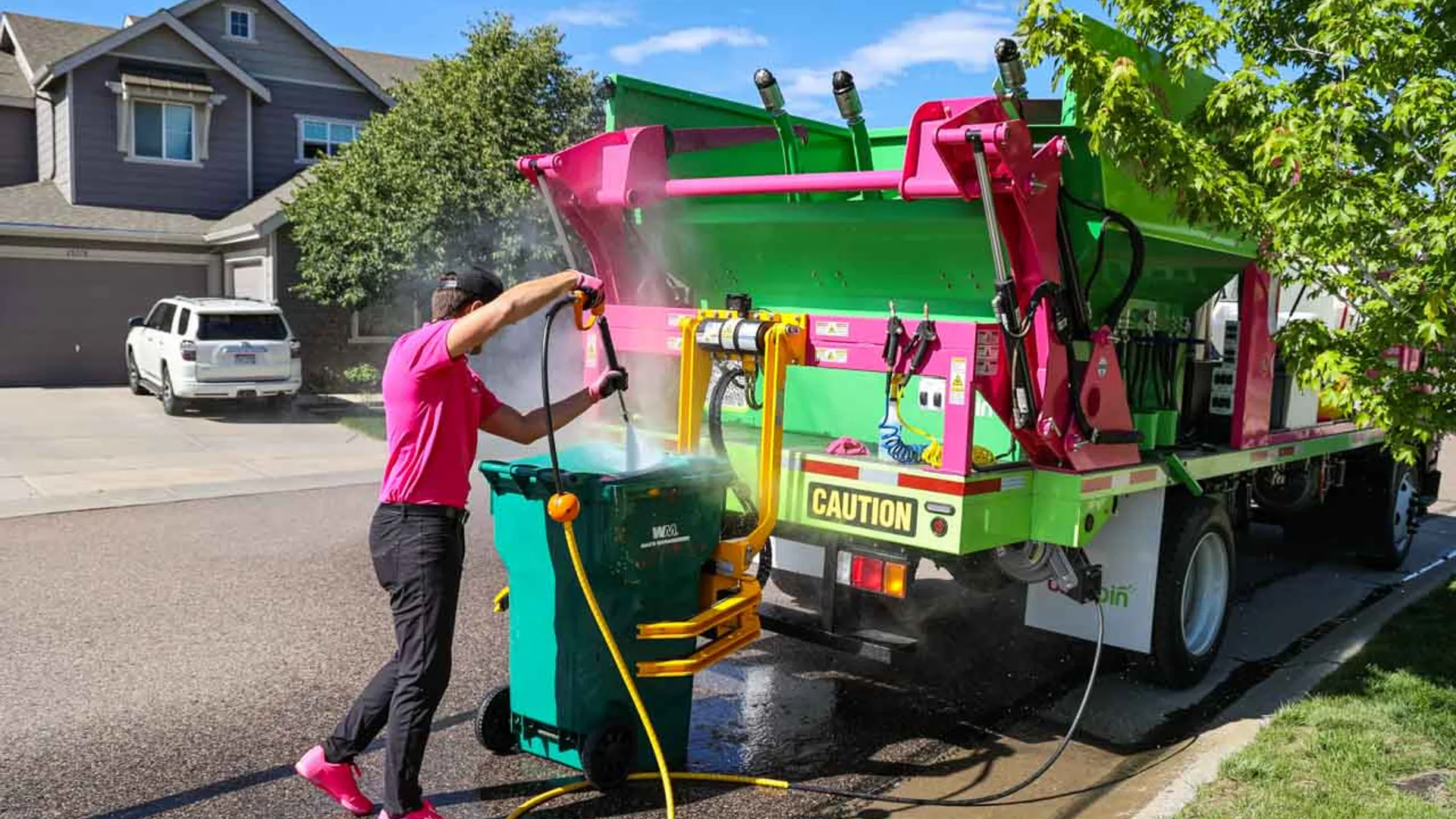
How professional cleaning helps. Britebin sanitizes, disinfects, and deodorizes cart interiors after municipal pickup when possible — the same post-collection timing described in our same-day bin cleaning guide. We remove buildup that household rinsing rarely reaches. That does not guarantee wildlife will ignore your cart; CPW is clear that no single step replaces securing attractants. It does reduce lingering food odor that can draw repeat visits after a bear already succeeded once.
After a bear visit. Torn bags, dented lids, and claw-scored plastic need more than a hose. Document damage for your hauler or HOA, replace compromised lids if needed, and schedule a deep clean before the next storage cycle. If the bear obtained food reward, expect return visits until smell and access both change — CPW's living-with-wildlife guidance emphasizes removing the reward, not just shooing the animal.
Compost and green-lid carts. Organics streams concentrate smell. Evergreen and Golden customers with three-stream collection should treat compost carts with the same storage discipline as trash. Bear-resistant hardware for compost exists but is less universal; frequency of professional cleaning often increases in summer when heat accelerates decomposition. See our compost and heat notes on the blog for seasonal planning.
Frequency on foothill routes. Many Golden and Evergreen addresses choose bi-monthly or monthly service during peak wildlife and tourist seasons. Quarterly can work when carts stay in a locked garage between pickup and cleaning. Tell us about prior bear activity, gate codes, and steep driveways when you book — foothill routing batches stops from our Golden headquarters.
We provide residential bin cleaning throughout the west metro and foothills. Call 303-805-3600 or use contact with your address, trash day, and any wildlife notes. Official wildlife guidance stays with CPW and your local jurisdiction; we stay in our lane — cleaner, fresher carts after pickup day.