
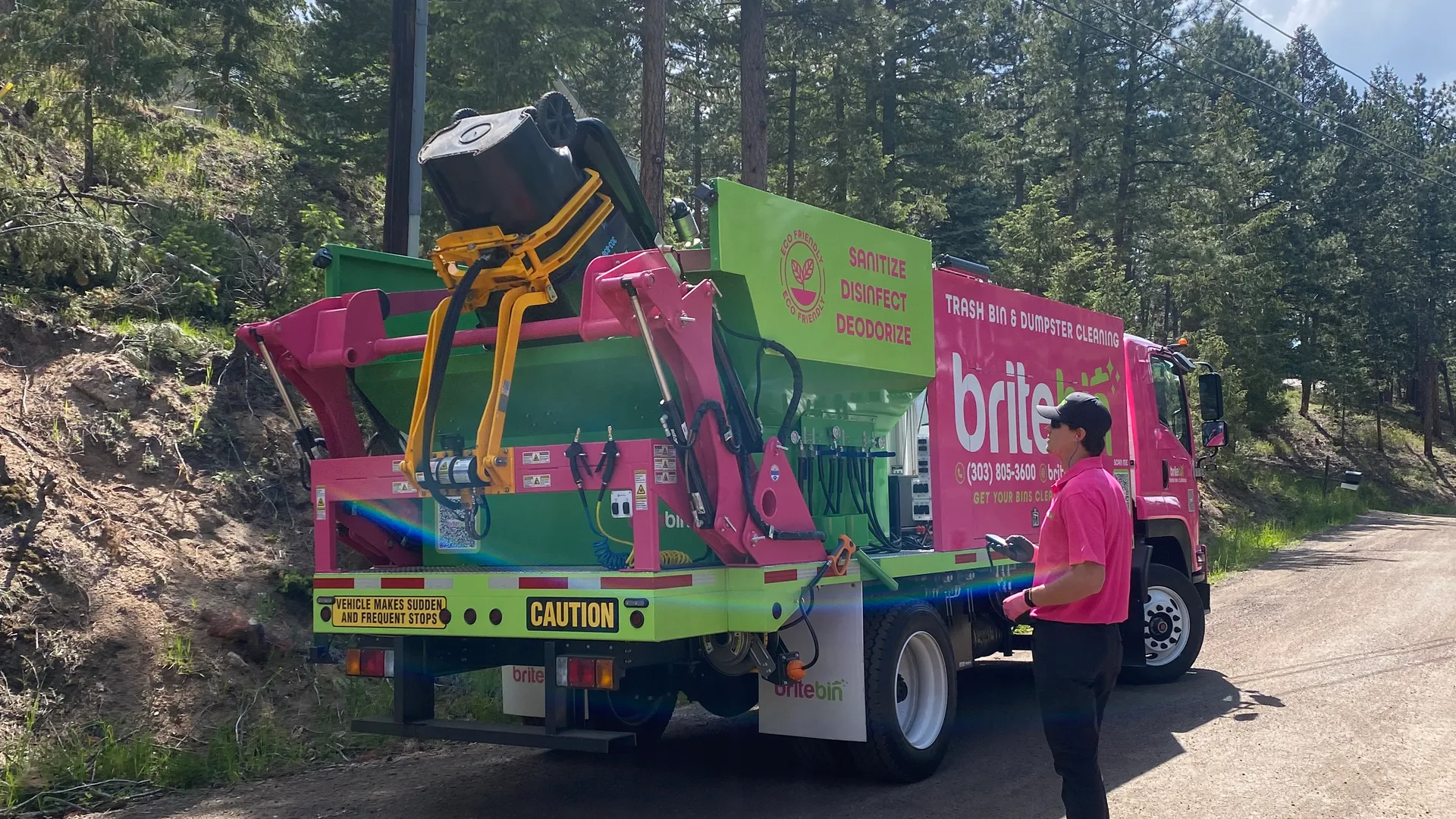

Deep dumpster cleaning is a full reset for a dumpster, not just a quick hose-down. If your dumpster still smells bad right after pickup, or the pad around it looks sticky by mid-afternoon, deep dumpster cleaning is usually the fix that actually gets to the problem.
What deep dumpster cleaning means
Deep dumpster cleaning means thoroughly removing the grime, grease, residue, odors, and bacteria that build up inside and outside a dumpster over time. Think of the difference between wiping a kitchen counter and scrubbing a baked-on oven. One makes the surface look better for a moment. The other removes what has been stuck there for weeks or months.
That distinction matters. A surface rinse can wash away loose mess, but it usually leaves behind the thick layer of sludge, food drips, oily film, and sour-smelling residue that causes most dumpster problems. Deep cleaning goes after that hidden buildup, especially in corners, along sidewalls, under lids, around hinges, and near drain points.
In plain English, this is the kind of cleaning that gets a dumpster back to a usable condition instead of just making it look slightly less dirty.
What a deep dumpster cleaning usually includes
A proper service usually follows a clear process. That matters because you are not just paying for water. You are paying for buildup to be loosened, removed, sanitized, and rinsed away so the dumpster is genuinely cleaner when the job is done.
Inspection and condition check
The job usually starts with a close look at the dumpster’s condition. That includes checking for heavy buildup, leaks, stains, pest activity, and trouble spots around lids, hinges, handles, and drain areas.
This first step is easy to overlook, but it tells you a lot. If grease has collected along the bottom seam or liquids have pooled in one corner, the cleaning approach may need to be more aggressive there. If the lid area is coated with old residue, that is often where the worst smell keeps hanging on.
Debris removal and pre-rinse
Before real washing can start, loose trash, sludge, and stuck-on waste often need to be cleared out. Otherwise, the cleaning turns into muddy soup fast, and that makes the whole process less effective.
A pre-rinse helps soften residue and flush away surface material so deeper washing can actually reach the grime underneath. It also helps keep drains, collection systems, and the wash area from getting overloaded with chunks of waste all at once.
Hot water or pressure washing
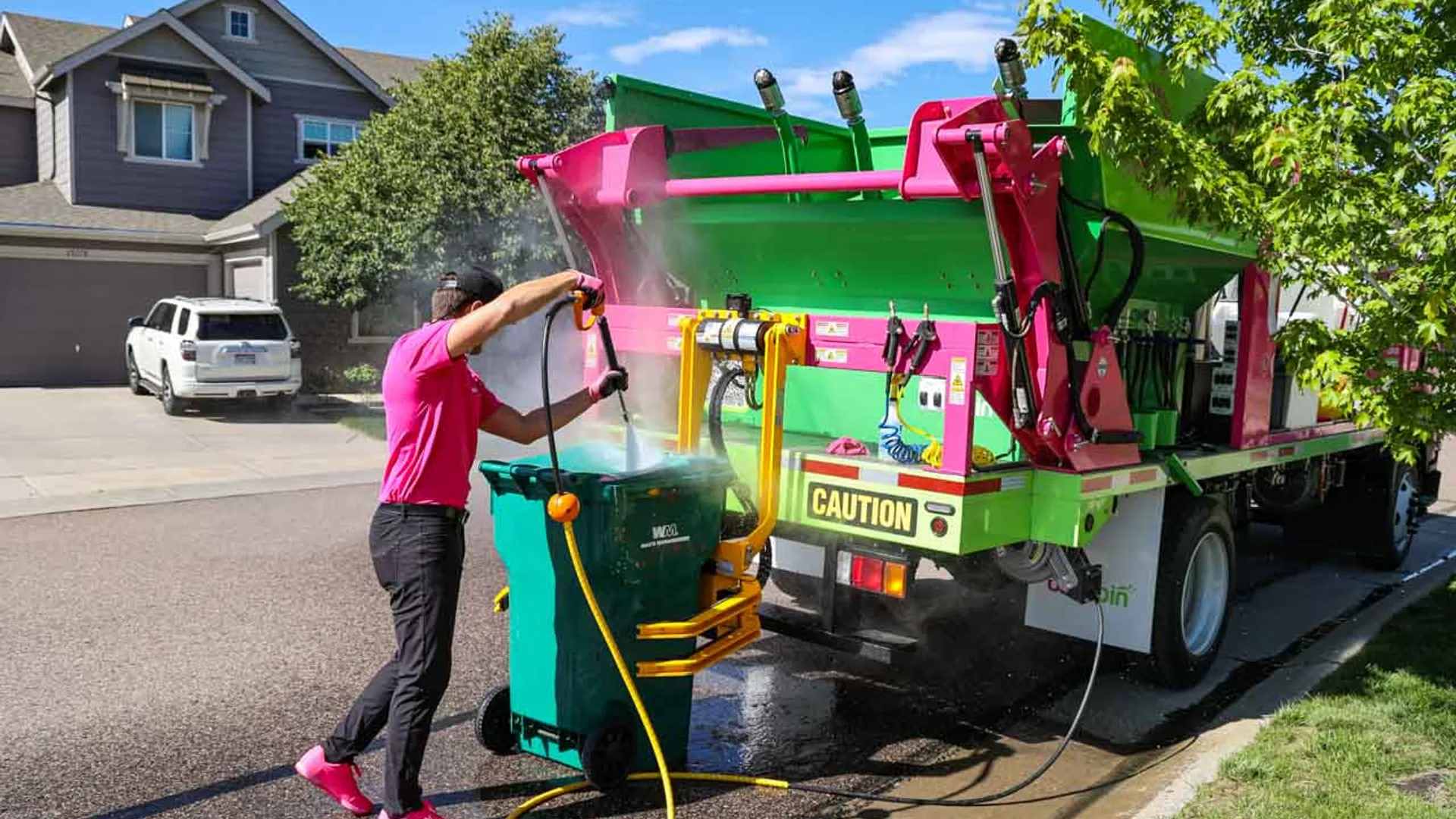
This is where the visible change usually happens. Deep dumpster cleaning often uses high-pressure washing, and hot water makes a big difference when grease and food residue are involved.
Hot water helps break up the oily film that cold water tends to skate over. Pressure washing then strips that loosened grime from interior walls, floors, lids, and exterior panels. The result is not just cleaner metal or plastic. It is less residue left behind to trap new dirt and smell bad again a day later.
Degreasing, sanitizing, and odor treatment
These three terms get tossed around a lot, so it helps to keep them simple.
Degreasing means breaking down oily buildup that sticks to surfaces and holds onto dirt. Sanitizing means reducing germs on the cleaned surfaces. Odor treatment means knocking down the sour, rotten smell that tends to linger after trash day, especially in a back alley, shared enclosure, or loading area that gets warm in the sun.
Each part does a different job. Degreasing removes the sticky layer. Sanitizing deals with the hygiene side. Odor treatment helps finish the reset so the dumpster does not still smell like old trash the minute the lid opens.
Final rinse and area cleanup
At the end, the loosened grime needs to be rinsed away completely. A good final rinse clears out leftover cleaning solution, sludge, and residue from the dumpster itself.
Just as important, the area around the dumpster should be cleaned up too. Splash, runoff, and grime on the dumpster pad or nearby concrete can keep the space smelling bad even after the bin is cleaner. When the job is done right, the whole area looks and smells noticeably better.
Why deep dumpster cleaning helps more than you think
Regular deep cleaning makes dumpsters easier to manage, less gross to use, and less likely to create bigger problems around your property. That is the plain truth.
Dumpster mess has a way of spreading. It starts as a smell, then turns into stains, insects, sticky lids, and complaints. Cleaning cuts that cycle short.
Cuts down strong odors
Most bad dumpster smells come from old residue, trapped liquids, and food waste that never fully leaves with pickup. Sprays and deodorizers can cover the smell for a while, but they do not remove the source.
That is why deep cleaning works better. Once the sludge and liquid buildup are gone, the odor usually drops fast. Not always to zero forever, but enough that opening the lid no longer feels like a dare.
Helps reduce bacteria and germ buildup
Dumpsters collect organic waste and moisture, which is a messy combination. When residue stays in place, germs have an easy place to hang around.
Deep cleaning does not turn a dumpster into an operating room, obviously. But it does remove the caked-on material where bacteria can build up, and sanitizing helps reduce what is left behind on the surface. For homes, apartments, restaurants, and shared commercial areas, that makes the space cleaner and easier to deal with.
Makes pests less interested
Flies, maggots, roaches, and rodents are drawn to lingering waste, odor, and moisture. If a dumpster keeps attracting pests, the smell and residue are usually part of the reason.
Cleaning is not pest control, and it should not be sold like it is. But it does remove a big part of what makes the dumpster attractive in the first place. Less gunk, less smell, less standing residue. That alone can make a noticeable difference.
Improves appearance for homes and businesses
A dirty dumpster area affects how the whole property feels. That is true for a restaurant loading zone, an apartment enclosure, a retail strip, or a shared residential bin area behind a row of townhomes.
People notice stained concrete, smeared lids, and black streaks along the sidewalls. A cleaner dumpster enclosure or pad simply feels better to use. It also sends a quiet message that the property is being looked after, which matters more than most people admit.
Who benefits most from deep dumpster cleaning
Some setups need this service more than others, but the range is wider than people think.
Homes, HOAs, and multi-unit properties
Shared bins in neighborhoods, townhouse communities, apartment complexes, and condo properties can get rough fast. One leaking bag or one week of summer heat is enough to start an odor problem that keeps coming back after every pickup.
If the area around the bins stays messy, smells bad, or draws insects, deep cleaning usually fits. The same goes for homes with larger outdoor cans that keep developing odor or grime issues.
Restaurants, grocery, and food-heavy businesses
Food waste creates faster buildup, stronger odors, and more grease. That means restaurants, grocery stores, cafes, bakeries, and similar businesses often need deeper cleaning more often.
Here’s the thing: once food residue starts coating the inside walls and floor of a dumpster, a quick rinse does very little. Grease clings. Liquids soak into old grime. Warm weather makes all of it worse.
Offices, retail, warehouses, and service properties
Even without heavy food waste, dumpsters at offices, retail stores, warehouses, and service properties still deal with leaks, dirty pads, smells, and appearance issues.
Cardboard runoff, broken bags, employee trash, and occasional dumped food all add up. If customers, tenants, or staff pass by the dumpster area regularly, keeping it cleaner is not just about sanitation. It is about the overall feel of the property.
How often you should get a dumpster deep clean
There is no perfect one-size-fits-all schedule. Frequency depends on what goes into the dumpster, how often it is emptied, how hot your climate gets, and how much residue builds up between pickups.
A food-heavy dumpster in summer may need monthly attention. A lower-use commercial bin might do fine with quarterly service. A residential setup may only need seasonal cleaning or an as-needed visit when odor spikes.
Signs your dumpster is overdue
A few signs are hard to miss. If the dumpster still smells after pickup, that is a strong clue. If you see sludge at the bottom, sticky sidewalls, insects around the lid, stained concrete, or black streaking on the exterior, the buildup has already gone past simple rinsing.
Complaints are another sign. If tenants, staff, neighbors, or customers keep noticing the dumpster area, the problem is already visible and probably smellable too.
Common cleaning schedules
Monthly cleaning is common for restaurants, grocery stores, and high-volume commercial sites, especially in warm weather. Quarterly service often fits offices, retail properties, and moderate-use shared dumpsters. Seasonal cleaning works for lighter residential or HOA setups that mostly stay under control.
As-needed service still has a place, especially after spills, missed pickups, pest flare-ups, or a stretch of hot weather that turns minor residue into a real problem.
Deep dumpster cleaning vs. regular rinsing
A regular rinse can help with fresh residue. If the dumpster only has a little new mess after pickup, a quick wash may be enough to keep things from getting worse.
But older buildup is different. Grease, stains, caked-on sludge, and deep-set odor do not usually come off with a light rinse. That is the catch. The dumpster may look slightly better while the real source of the smell stays in place.
A good rule is simple: if the dumpster is empty and still smells bad, feels sticky, or looks stained, it probably needs a true deep clean, not another quick spray-out.
What to ask before booking a service
A few basic questions make it easier to compare services without turning it into homework.
What methods and products are used
Ask whether the service uses hot water, pressure washing, degreasers, sanitizers, and odor treatment. You want to know if the process matches the mess, especially if grease or heavy residue is involved.
It also helps to ask whether the products are a good fit for the dumpster material and the surrounding surface. Concrete pads, painted enclosures, and nearby landscaping can all be part of the job area.
How runoff and wastewater are handled
This matters more than it sounds. Cleaning a dumpster creates dirty wastewater, and that needs to be handled responsibly, especially at commercial properties.
You do not need a technical explanation. You just want to know the runoff is not being left to spread across the lot or wash into the wrong place.
Whether related cleanup services are available
Sometimes the dumpster is only half the problem. The pad, enclosure walls, gates, and nearby concrete may need cleaning too.
That is where related services can help, including dumpster pad cleaning, enclosure washing, and light pressure washing for nearby surfaces. If the smell is living in the surrounding area as much as the bin itself, cleaning only the dumpster may not fully solve it.
Common questions about deep dumpster cleaning
Will cleaning remove every odor? Deep cleaning removes the main odor sources, and that usually makes a big difference. But if trash sits too long, bags leak constantly, or pickup frequency is too low, odor can return faster than you want.
The real win is removing the built-up source of the smell instead of trying to cover it up.
Do you need to empty the dumpster first? Yes, cleaning works best when the dumpster has been emptied or is as empty as possible. Packed trash blocks access to the dirtiest surfaces, especially the floor and lower sidewalls where residue collects.
Right after pickup is usually the best moment to check the condition and schedule service.
Is this only for commercial dumpsters? No. Smaller shared bins, residential trash cans, HOA setups, and multi-unit properties can benefit too. If odor, pests, grime, or stains keep coming back, the size of the container matters a lot less than the condition it is in.
One simple next step if your dumpster smells bad
Check your dumpster right after the next pickup. If the smell, sticky residue, or stains are still there while it is empty, that is the clearest sign that a deep dumpster cleaning is worth trying.